Quentin Tarantino and Sylvester Stallone are filming a gangster series
The miniseries will consist of six episodes
Master director Quentin Tarantino has finally found his new project – but in a different way than expected. It is not his eagerly awaited tenth film, but a gangster series. According to TMZ, he has even brought Sylvester Stallone on board.
However, contrary to all expectations, Stallone will not be in front of the camera. Instead, he will co-direct the series with Tarantino. Details on the casting of the roles are currently still under wraps.
According to initial information, the six-part mini-series is set in the 1930s and will be shot entirely in black and white. The plot takes us into a world full of gangsters, showgirls and boxing matches, accompanied by the appropriate music of the decade. To perfectly capture the atmosphere of Hollywood's "Golden Era", original cameras from the period will even be used. We are excited!
Quentin Tarantino: the master of modern cinema and his films
Quentin Tarantino is one of the most important and influential directors of our time. Since the early 1990s, he has revolutionized cinema with his unmistakable style. His films are known for their non-linear narrative structures, their sharp-witted dialogue, their stylized violence and their numerous allusions to other works of film history. Tarantino sees film not just as entertainment, but as an art form – and this is reflected in every one of his works.
The beginnings: his entry into cinema
His debut film "Reservoir Dogs" marked the beginning of an extraordinary career. Despite a low budget, the film impressed with its dense atmosphere, intense characters and innovative narrative style. Tarantino already showed here that he can achieve great effects with few resources.
His worldwide breakthrough came with "Pulp Fiction". The film won the Palme d'Or in Cannes and is still considered one of the most influential films of the 1990s. The convoluted plot and iconic dialog made it a cult classic.
Genre experiments and further development
This was followed in 1997 by "Jackie Brown", a calmer and more mature film based on a novel. Compared to his earlier works, this film is less playful and more focused on character development. With "Kill Bill: Volume 1" and "Kill Bill: Volume 2", Tarantino created a two-part revenge epic. These films combine elements from martial arts cinema, westerns and anime and show his love of different genres. The stylized depiction of violence and the strong female lead character are particularly striking.

New heights: Big themes and epic stories
In 2007, Tarantino released "Death Proof", a homage film to so-called grindhouse cinema. The film experimented heavily with style and narrative and was aimed particularly at film fans. Tarantino reached a new phase in his career with "Inglourious Basterds". The film tells an alternative version of the Second World War and combines historical elements with fictional revenge fantasies. The dialog and suspenseful direction in particular were widely praised. This was followed in 2012 by "Django Unchained", a western that deals with slavery in the USA. The film combines serious themes with Tarantino's typical style and won several Oscars.
Late works and artistic maturity
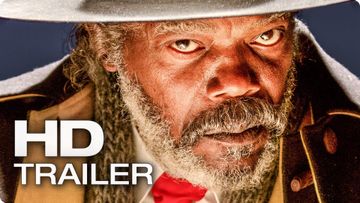
Tarantino returned to the western genre with "The Hateful Eight". The film largely takes place in a single room and thrives on intense dialog and steadily rising tension. It demonstrates Tarantino's ability to tell a gripping story with minimal means. His last film to date, "Once Upon a Time in Hollywood", is a homage to the Hollywood of the 1960s. The film combines fictional characters with real events and shows Tarantino's love of film history particularly clearly. At the same time, it is a thought-provoking work about change and transience in the film industry.
Style and special features of his films
All of Tarantino's films are characterized by certain features. These include, above all, the non-linear narrative style, which actively challenges the viewer. His dialog is also unique: it often seems mundane, but has a deeper meaning and drives the plot forward.
Another important element is the music. Tarantino deliberately uses selected songs to enhance his scenes and give them a special atmosphere. This combination of image and music makes for many unforgettable moments. The depiction of violence is also a central theme. It is usually stylized and exaggerated, making it more of an artistic device than a realistic depiction.
Influence on the film world
Tarantino's influence on modern cinema can hardly be overestimated. Many directors have been inspired by his style, especially his storytelling and dialog. His films have shown that it is possible to make artistically sophisticated works accessible to a wide audience.
He has also contributed to making lesser-known genres and film traditions popular again. His homages to older films have rekindled interest in film history.
Conclusion
Quentin Tarantino has created a unique body of work with his films that is second to none. From "Reservoir Dogs" to "Once Upon a Time in Hollywood", there is a clear artistic signature that has constantly evolved. His films are more than mere entertainment – they are creative experiments, homages to cinema and expressions of a very personal vision. With his uncompromising approach, Tarantino has written film history and will continue to be regarded as one of the greatest directors of all time.